
Finding St. Charles Resident Records
St. Charles is both an incorporated city and the county seat, so a useful search can move between City and County custodians. Begin with an address when one is known. The Assessor and GIS map connect it to a parcel, then the Recorder provides a dated ownership trail. Begin with a name when the goal is a single identity. An exact voter confirmation, a Case.net party search, or a historical directory can each test a different fact. A property card is assessment evidence, not proof that someone lives there.
The strongest resident record is a chain, not one hit. An address can be current while a directory is historical. A court filing can identify a litigant but not every person mentioned in a case. Missouri's protected-address rules, restricted vital records, sealed files, private household details, DMV data, and utility customer information set real limits on a search.
- Search a known address or parcel in the County Assessor database and keep situs and mailing fields separate.
- Open that place in the GIS viewer and note the parcel identifier and source date.
- Search the Recorder's grantor-grantee index for a dated instrument or legal description.
- Use the exact Missouri voter tool or a scoped Election Authority request for the limited data allowed by law.
- For an older household, compare a library directory year with census, archive, or local-history material.
Note: A reliable trail identifies both the source and the narrow fact it supports.
St. Charles Offices for Resident Records
Different custodians keep different parts of a St. Charles resident record. County offices downtown preserve land, assessment, and court material. The Election Authority handles registration-file requests, while the statewide tool is an identity confirmation rather than a browsable roll. The City Clerk is a separate route for municipal material. For a named street and its parcels, use the more detailed St. Charles street directory method instead of treating this overview as a block search.
Recorder of Deeds
201 N. Second Street, Suite 338
St. Charles, MO 63301
636-949-7505
Election Authority
St. Charles County Election Authority
Registration and public-file requests
County office route
St. Charles Address and Parcel Searches
The St. Charles County Assessor Property Database is built for an address, street, city, ZIP, account, or parcel search. Its public form did not expose an owner-name field. A broad street search can be narrowed by subdivision, property type, sale date, or parcel ID. Assessment data is useful evidence, but the office says it is not ownership verification or transfer evidence. Preserve the parcel number before moving to deeds or plats.
| Assessor control | Use in a St. Charles search | Limit |
|---|---|---|
| Street or address, city, ZIP | Find a known location | Not an owner-name search |
| Account or parcel ID | Connect a card to GIS context | Keep it separate from the street string |
| Subdivision and property traits | Narrow a broad result set | Result-cap details were not exposed |
| Sale-date filters | Review assessment context | Not a tax-payment record |
The County GIS map adds parcel geometry, roads, buildings, zoning, districts, aerial context, Identify, measure, export, and bookmark tools. Its boundary is not a legal survey. A situs address can differ from a tax mailing address, so the two fields need distinct notes.
St. Charles Voter Record Boundaries
Missouri Check Your Voter Registration requires exact registration information. It helps confirm an individual record, not browse everyone on a street. St. Charles County can provide voter-file material through the Election Authority under statutory and Sunshine Law procedures. Scope a request carefully, and do not treat its result as a complete household list.
RSMo §§115.157 and 115.163 limit the public release set. Qualifying residential addresses can be court-closed. A voter result or request can support an election-related address and precinct connection, but it cannot override a protected address or settle a same-name match alone.
St. Charles Recorder Party Indexes
The Recorder of Deeds keeps deeds, mortgages, liens, plats, marriages, and other instruments, with special limits on sensitive material. An instrument can supply grantor and grantee names, recording date, document type, instrument or book-and-page placement, and legal-description clues. Counter research is free, prints cost $1 per page, Tapestry can charge per search, and Laredo is subscription-based. The County describes free prints for consistent St. Charles searches through Laredo.
Use a parcel or legal description to bridge a street number to documents, then read the parties in sequence. The office did not publish an online index cutoff or a complete live vendor-field capture. A missing web result is therefore not proof that an earlier document is absent. Ask about counter, mail, or e-recording channels when the online route ends.
See the Recorder's land-record access page before choosing a counter or vendor route.
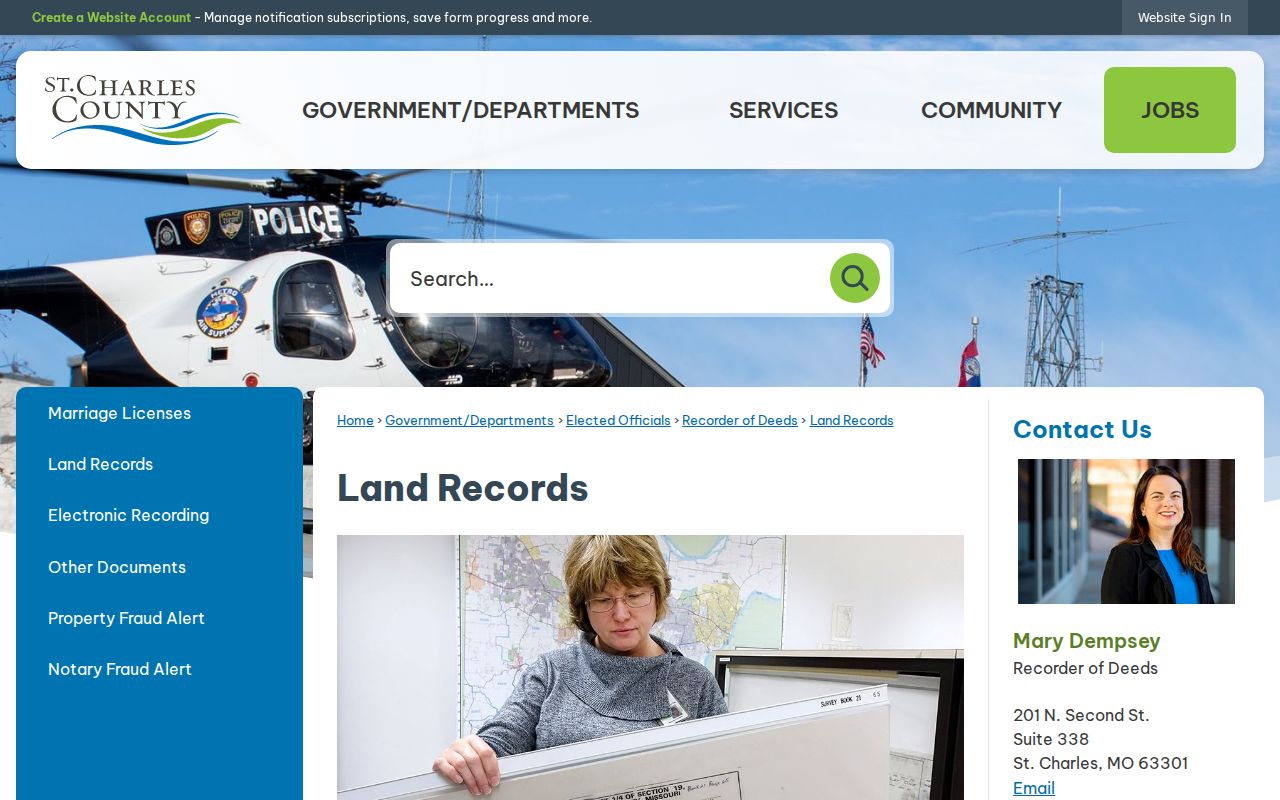
The office route starts a dated ownership trail; it does not identify every resident at an address.
Current St. Charles Directory Sources
No official master list names every St. Charles resident. Each record answers a narrower question. Property information is address-led, voter confirmation requires exact inputs, and a recorded document identifies a party to that document. Keep the record type with the conclusion. When a search needs to confirm one person across sources, the St. Charles resident lookup workflow provides a focused comparison.
| Source | What it can establish | Custodian | Access path |
|---|---|---|---|
| Assessor property database | Parcel, situs, assessment context, possible mailing field | County Assessor | Address, ZIP, parcel, and property filters |
| Recorded instruments | Parties, dates, document placement, legal description | Recorder of Deeds | Counter, mail, Tapestry, or Laredo |
| Voter confirmation or file | Limited registration and election information | Secretary of State / Election Authority | Exact lookup or scoped request |
| Case index | Public litigant, case, hearing, and status material | Missouri courts / Circuit Clerk | Case.net and clerk copy route |
| Historical directories | Dated household or address snapshot | Library / Historical Society | Microfilm, archive, and database routes |
For a past household, a directory or archive can be more useful than a current parcel card. For a current case, a public docket can confirm only the court fact it displays. Cross-checks prevent an old address, an ownership role, or a same-name result from becoming an unsupported identity claim.
St. Charles Court Record Connections
Missouri Case.net offers litigant-name, filing-date, case-number, and scheduled-hearing search modes. The 11th Judicial Circuit serves St. Charles County. A public docket can show a case number, court, case type, party role, filing date, hearings, docket events, and a status or disposition when public. A name search identifies litigants, not every person named in a file, and documents may be confidential or sealed.
The City municipal division directs cases before January 1, 2021 to the court and later cases to Case.net. The Circuit Clerk supplies copies at $0.25 per page and certification at $1.50. Sealed access is limited to a party or attorney with identification. The research could not inspect a live Case.net result, so a blocked result or missing field should never be read as proof that a record does not exist.
St. Charles Vital Record Paths
Birth and death records do not follow the property-record route. The Missouri Bureau of Vital Records, County local registrar, Recorder for marriage licenses, and Circuit Clerk for divorce decrees divide custody. RSMo §193.245 restricts vital information to eligible applicants. The County local system lists births since 1920 and deaths since 1980. State Archives routes cover pre-1910 abstracts and death certificates more than 50 years old. A state divorce statement is not the court decree.
Use state, local, mail, in-person, or VitalChek channels according to the record and eligibility. The County local registrar is at 1650 Boone's Lick Road and says a record in its computer system often takes 10 to 20 minutes. State mail is listed at 4 to 8 weeks. Do not use an index to bypass relationship, identity, or adoption restrictions.
Missouri's official order page shows the documented request routes.
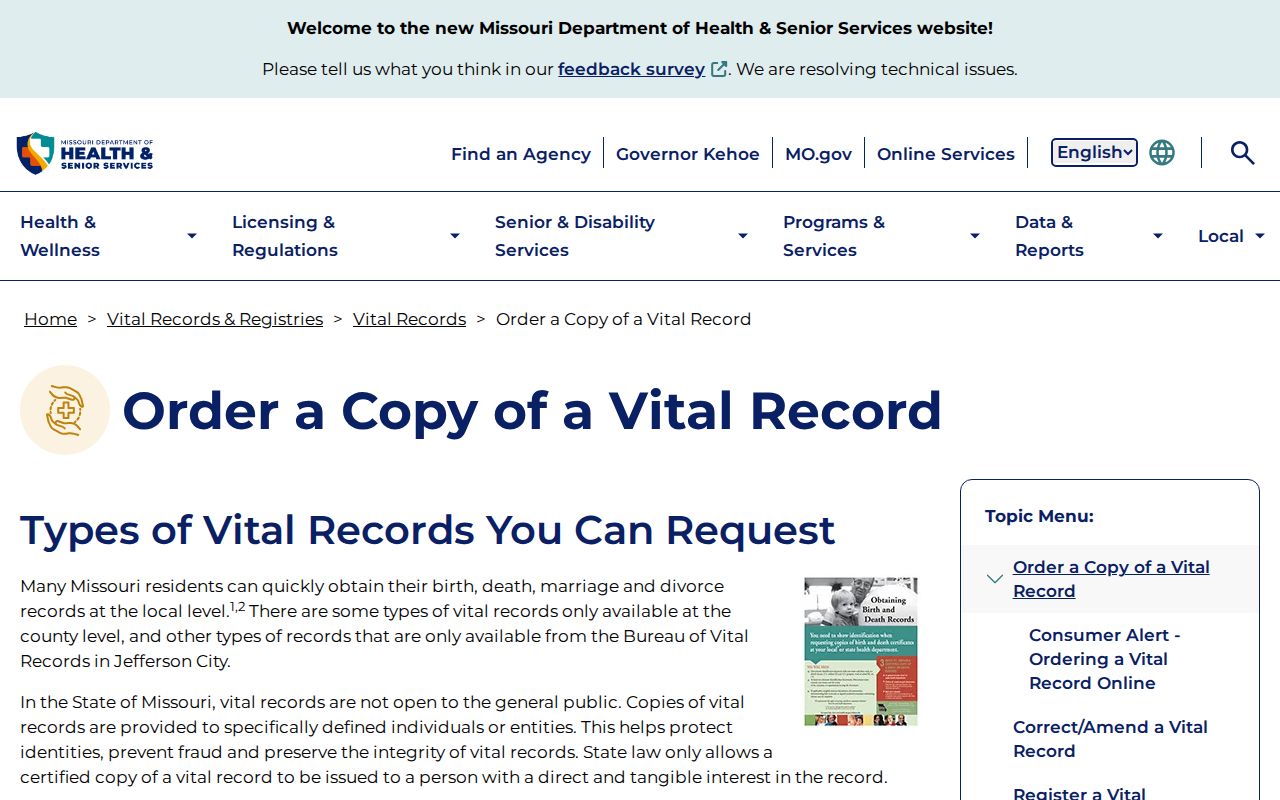
That route belongs in an eligibility-based family-history search, never as a way around restricted records.
St. Charles Identity Leads in State Records
A name can appear in state records as an affiliation rather than a residence. The Missouri business entity search supports business-name, registered-agent, charter-number, and related modes. The professional license search and active-license downloads offer board-specific identity and status information. A registered agent, officer, licensee, or permit applicant is not automatically a current resident, so test the result against a dated official address or another record.
Missouri's unclaimed-property search is a free name lead. A claimant must still provide proof, and a match does not settle identity. These records can help reconnect a family history or clarify an estate trail when checked against the custodian's material.
The professional registration services hub routes users to state boards and active-license material.
Board fields vary, so the displayed board and status need a second record before an identity is confirmed.
The Missouri Treasurer search has no charge to search or claim.
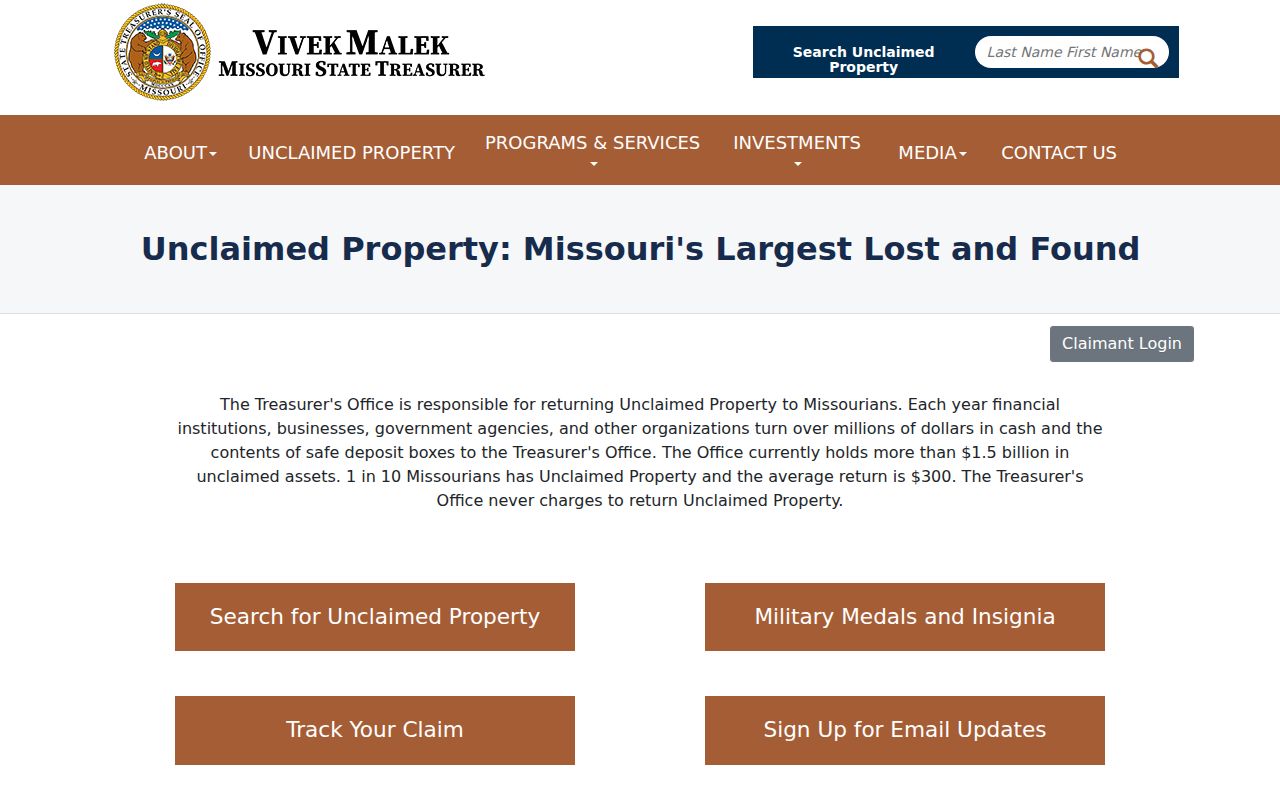
It can point to a possible name trail, but the claim route requires its own proof and review.
Missouri Sunshine Requests in St. Charles
When a public St. Charles record is not online, the Missouri Sunshine Law provides a request path. RSMo §610.023 requires a custodian to respond as soon as possible and no later than the end of the third business day after receipt. A delayed response needs an explanation and estimated availability; a denial must be written with its legal basis. Name the record category, date range, delivery format, and a preference for segregated public portions.
RSMo §610.026 allows stated copy and actual-cost charges, and payment can be required before work. The County request form includes description, period, copy, fee-notice, and segregate-closed-portions choices. The City has a Sunshine Law route; JustFOIA began in 2025 for submission, tracking, payment, and download.
Use the County's record-request form to seek a specified document rather than ask an office to create an answer.
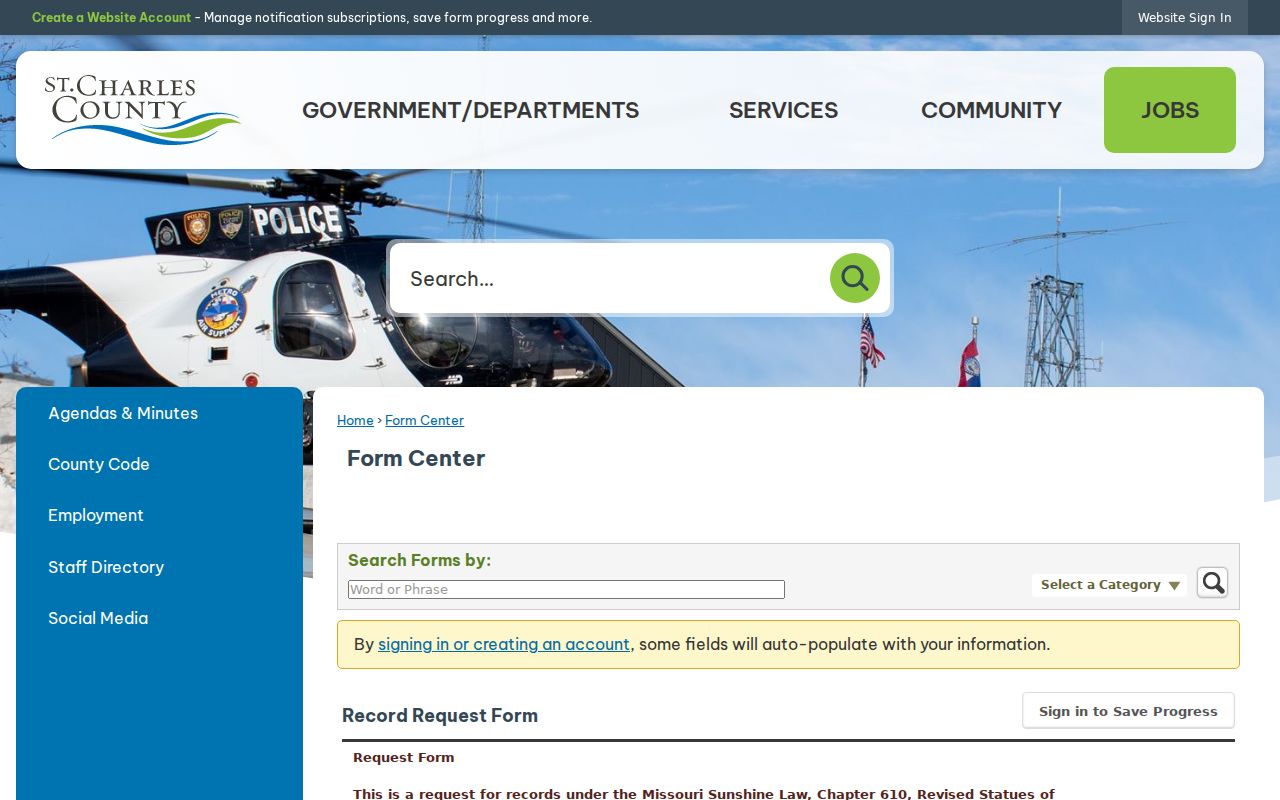
A narrow request retains the record type, date, and delivery choice needed for a usable response.
Historical St. Charles Directory Records
St. Charles historical work has a strong local shelf. The official holdings guide lists microfilm years for 1906, 1934, 1936, 1948, 1950, 1952, 1955, 1957, and 1959. They are discrete years, not proof of a continuous run. The St. Charles County Library's Kathryn Linnemann Branch connects researchers with the Bizelli-Fleming Local History Collection, databases, newspapers, maps, yearbooks, and genealogy tools. A criss-cross directory, when held, reverses the usual entry by placing an address before an occupant.
For entry conventions and address-to-occupant searches, use the St. Charles directory collection. Pair a directory year with census, naturalization, cemetery, or deed evidence rather than treating one printed entry as a complete life story. The Historical Society's archive holds street files, deeds, court books, maps, and family-history material, while its public online coverage is not complete.
- Parcel
- A land unit identified in assessment and map systems.
- Index
- A finding tool that points to a document or placement, not always the document itself.
- Criss-cross directory
- An address-led directory used to find a historical occupant.
- Situs address
- The physical property location, which can differ from a tax mailing address.
St. Charles Archives and Family Trails
St. Charles's county-seat and first-state-capital history creates overlaps between City, County, and state collections. The St. Charles County Historical Society reports more than 200 years of maps and government records, plus family-history files on more than 75,000 people. Its material includes city directories, census indexes, newspapers, cemetery and church records, tax records, deeds, court books, naturalization, and probate material. Those archive routes are especially useful when a modern form offers no historic result.
The library and County Parks announced a Heritage Center for mid-to-late 2026 at the Heritage Museum in St. Peters. The reported 16,000-item collection includes old phone books, microfilmed newspapers, church and marriage records. It is a research lead, not a promise that every item is online. Missouri State Archives naturalization records cover 1816 to 1955 and can add court, county, country, and reel or volume placement to a family trail.
St. Charles Protected Address Limits
Public access does not erase privacy rules. Missouri Safe at Home supplies qualifying participants with a designated address for government and court records, and RSMo §115.157 allows court-closed voter residential addresses for specified protected groups. Juvenile, sealed, expunged, and protected court material can be unavailable. Vital records carry their own eligibility rules. The federal Driver's Privacy Protection Act also keeps DMV personal-address data outside a public resident-record channel.
| Record type | Strength | Why a second check matters |
|---|---|---|
| Assessor or GIS | Address and parcel context | Assessment is not an occupancy finding |
| Recorder index | Dated instrument parties | Party status does not establish current presence |
| Voter or court record | Record-specific identity or case fact | Protected fields and same-name matches require care |
| Paid compiled search category | Convenient lead | It can be stale or merge people; confirm with a custodian |
St. Charles Property Fraud Alert
The County's Property Fraud Alert is a practical monitoring tool after an ownership concern. It is free and sends an alert when a matching name or business name appears on an instrument recorded during the prior 48 hours. The alert identifies an instrument number, but it does not prevent a fraudulent recording or remove one. That distinction matters when a letter or solicitation claims payment is needed for protection or a copy.
County materials described more than 1,000 signups on the day after a 2025 warning campaign. Verify a notice through the Recorder's official route, inspect the instrument, and use the suitable legal or court process if correction is required. Save a source date and result rather than relying on an unverified call or private notice.
The official Property Fraud Alert information explains enrollment and its limits.
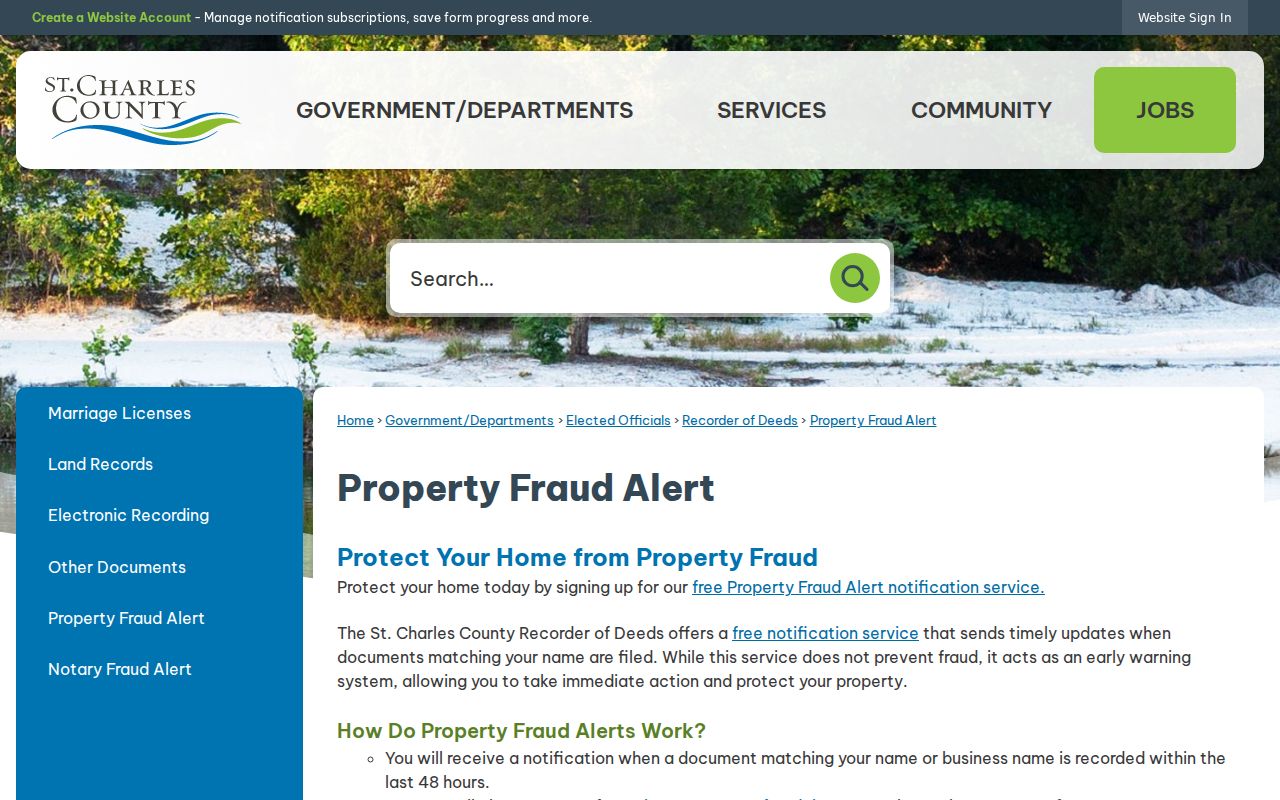
The service can flag a recorded-name match, while the Recorder instrument remains the record to review.